Rishabhadeva
The first Tirthankara — the founder, the king who taught humanity agriculture, art and governance before turning ascetic.
The sacred geography that gave the world a Tirthankara — and the royal lineage that prepared his soul for sovereignty over the self.

Among all the cities of ancient India, Ayodhya stands apart. To the Jain tradition, it is not merely a city of historical greatness, but a sanctified ground where multiple Tirthankaras have taken birth — making it one of the most luminous spiritual coordinates of the subcontinent.
Sumatinatha Bhagwan, the fifth Tirthankara, is among those whose Janma Kalyanak consecrates Ayodhya. The city, with its slow river and wide skies, was the first witness to a soul that had returned to earth not for itself, but for the awakening of others.


The lineage from which arose Tirthankaras, sovereigns and seers — a royal house whose authority was anchored not in conquest, but in conscience.
Tradition traces the Ikshvaku dynasty back to the dawn of civilised order, naming Bhagwan Rishabhadeva — the very first Tirthankara — as its illustrious progenitor. From Rishabhadeva onward, the line continued through generations of sovereigns and saints, producing several Tirthankaras of the present Avasarpini era, including Ajitanatha, Abhinandananatha, Sumatinatha and many others.
The Ikshvakus were celebrated for a singular conviction: that the king’s dharma is not to enrich himself, but to enrich the dharmic life of his people. Their rule was marked by codes of restraint, compassion to all life, and a profound respect for the ascetic and the seeker.
What makes the Ikshvaku line extraordinary is not how many kings it produced, but how many of them — at the height of their power — chose renunciation. Sumatinatha Bhagwan is one such heir, who walked away from the throne not in defeat but in transcendence.
The Ikshvaku heritage is woven through the very fabric of ancient Indian spirituality. Its values — truth, restraint, fearlessness and compassion — have flowed quietly into nearly every dharmic tradition that flourished afterward.
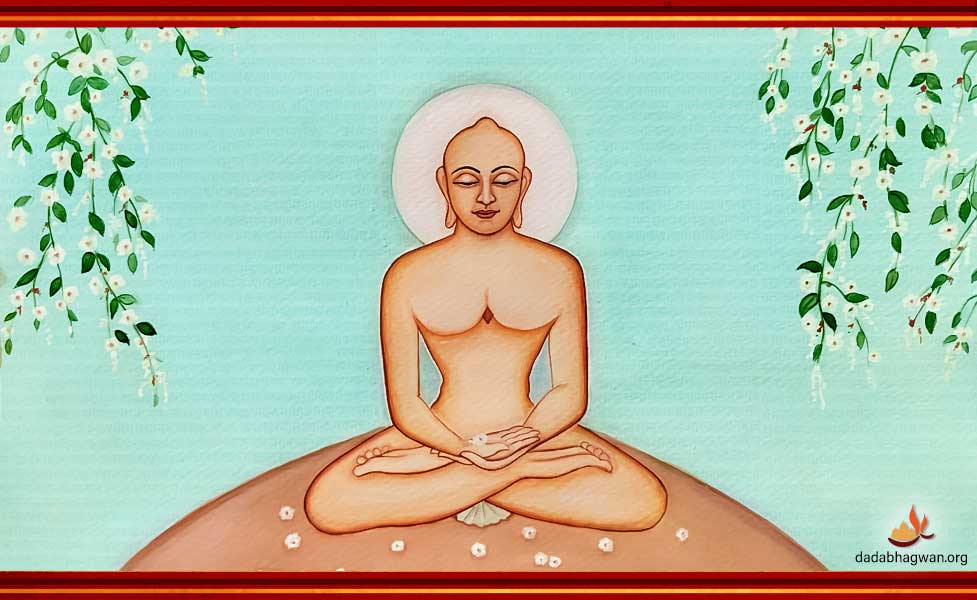
In the first half of his earthly life, Sumatinatha Bhagwan was a king — anointed, wise, beloved. He governed not by force but by example, and his reign is remembered as a brief golden age of fairness and quiet dignity.
In the second half, he was an ascetic — bare-footed, possession-less, awake. The same clarity he brought to the affairs of state he now turned toward the affairs of the soul, and the kingdom of his rule expanded from a city to the entire universe of consciousness.
Between these two lives lay a single, decisive moment: the choice to step away. It is this moment, more than any other, that the heritage of Ayodhya holds in trust for us.
The first five Tirthankaras of the Avasarpini era together set the spiritual character of an age. Sumatinatha is the fifth — completing the foundation upon which later Tirthankaras would build.
The first Tirthankara — the founder, the king who taught humanity agriculture, art and governance before turning ascetic.
The unconquered one — second in line, an embodiment of inner strength, also born in Ayodhya.
The third — celebrated for his deep equanimity and his enduring teaching that hardship is the soul’s sculptor.
The fourth — born again in Ayodhya, beloved for his benevolence and for re-anchoring the dharma in changing times.
The fifth — the Lord of Right Wisdom. He clarifies and crystallises the inner teaching of his predecessors, giving the seeker a luminous map of the mind.
The sixth — the lotus-radiant Lord, who follows in this lineage of awakening.
Across India — from Palitana in Gujarat to Moradabad in Uttar Pradesh, from Sinor and Matar to Sammed Shikharji — temples consecrated to Sumatinatha Bhagwan continue to carry the heritage forward. They are not merely architectural achievements, but living vessels of a teaching that refuses to fade.
To stand inside such a temple is to stand inside time itself — at once before the Lord, at once before one’s own quietest self.
View the visual heritage of Sumatinatha Bhagwan in our curated gallery.