
i.
Dharma is universal
By placing Rāma in the era of a Jain Tīrthaṅkara, the tradition affirms that dharma is one — and that great souls of every path are responding to the same inner call.
The age in which Munisuvrata Bhagwan walked the earth was also the age that produced one of Jain literature's most luminous epics — the Paumacariya, the Jain Rāmāyaṇa.
The Jain Rāmāyaṇa — most famously preserved in the Paumacariya of Vimalasūri (composed around the 1st–4th century CE) — recounts the story of Rāma, Lakṣmaṇa, Sītā, and Rāvaṇa as it has always been preserved in Jain tradition, with significant philosophical and ethical departures from the more widely known Vālmīki version.
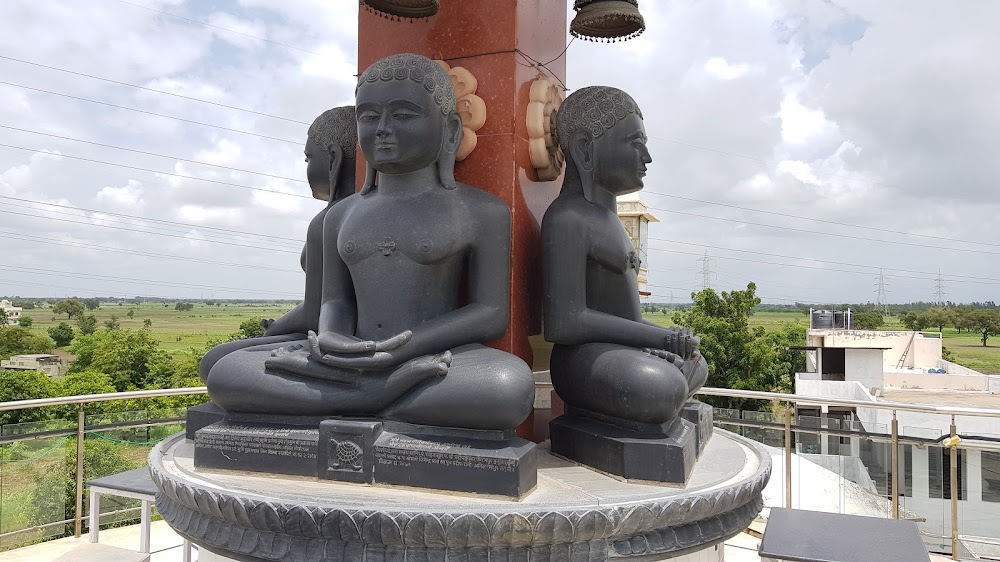
Critically, the Paumacariya places these events squarely in the era of Munisuvrata Bhagwan. The twentieth Tīrthaṅkara is the silent backdrop against which the entire moral architecture of the epic unfolds.
While Munisuvrata Bhagwan dwelled in the silence of Sammed Shikharji and the great cities of his time still echoed with his teaching, the kings of Ayodhyā, Mithilā, and Laṅkā were already weaving the threads of an epic to come.
In the Jain telling, none of these figures are divine. Rāma, Lakṣmaṇa, Rāvaṇa — they are exalted human souls, śalākāpuruṣas, "torch-bearing personages" of the cosmic age. They act, choose, suffer, and ultimately step toward (or away from) liberation, like every other soul.
In Vālmīki's telling, Rāma slays Rāvaṇa. In the Jain telling, it is Lakṣmaṇa who deals the final blow — for Rāma, in this tradition, is too steeped in the path of non-violence to take a life, even of his enemy.
Rāma in the Paumacariya ultimately renounces the throne, takes Jain dīkṣā, and attains liberation. Lakṣmaṇa, bound by the karmic weight of slaying Rāvaṇa, descends into a lower realm — until he too will rise. Rāvaṇa, far from a demonic figure, is portrayed as a learned king and devoted Jain who falls only because he allowed a single attachment — his desire for Sītā — to overpower a lifetime of discipline.

Where the Vālmīki epic celebrates kṣatriya valor and divine providence, the Paumacariya turns the lens inward. Each character becomes a living instruction:

Even the greatest king is undone by the smallest unguarded desire — and even the most ordinary soul is exalted by a single unwavering vow.
Embedding the Rāmāyaṇa within the era of Munisuvrata Bhagwan is not a literary footnote — it is a profound theological statement.
By placing Rāma in the era of a Jain Tīrthaṅkara, the tradition affirms that dharma is one — and that great souls of every path are responding to the same inner call.
The Paumacariya treats Rāma, Lakṣmaṇa, and Rāvaṇa as historical persons of an earlier age — emphasizing that their lives are instructive precisely because they are human.
Rāma's refusal to kill — even in righteous combat — anchors the entire epic in the Jain commitment to non-violence as the highest possible expression of dharma.

From Vimalasūri's Prakrit Paumacariya to Raviṣeṇa's Sanskrit Padmapurāṇa, from Svayambhūdeva's Apabhraṃśa retelling to the rich devotional literature of Hindi, Gujarati, and Kannada — the Jain Rāmāyaṇa has been continually re-imagined for almost two thousand years.
What never changes is the central moral architecture: that the era of Munisuvrata Bhagwan was an era in which even the heroes of an epic understood their lives as a long preparation for the soul's eventual return to itself.
Modern Inspiration